Emotion-Focused vs Emotionally-Focused Therapy — Is There a Difference?

If you’ve spent some time looking into therapy, chances are you’ve heard the acronym “EFT”. To the surprise and confusion of many - including some therapists and published articles – EFT could actually stand for two completely different things: Emotion-Focused Therapy and Emotionally-Focused Therapy. If you’re still unsure of the difference and have been thrown off by conflicting searches that sometimes even imply they may be the same thing, look no further, this article will clarify the difference as well as help you understand which one is best for your needs.
What Is Emotion-Focused Therapy?
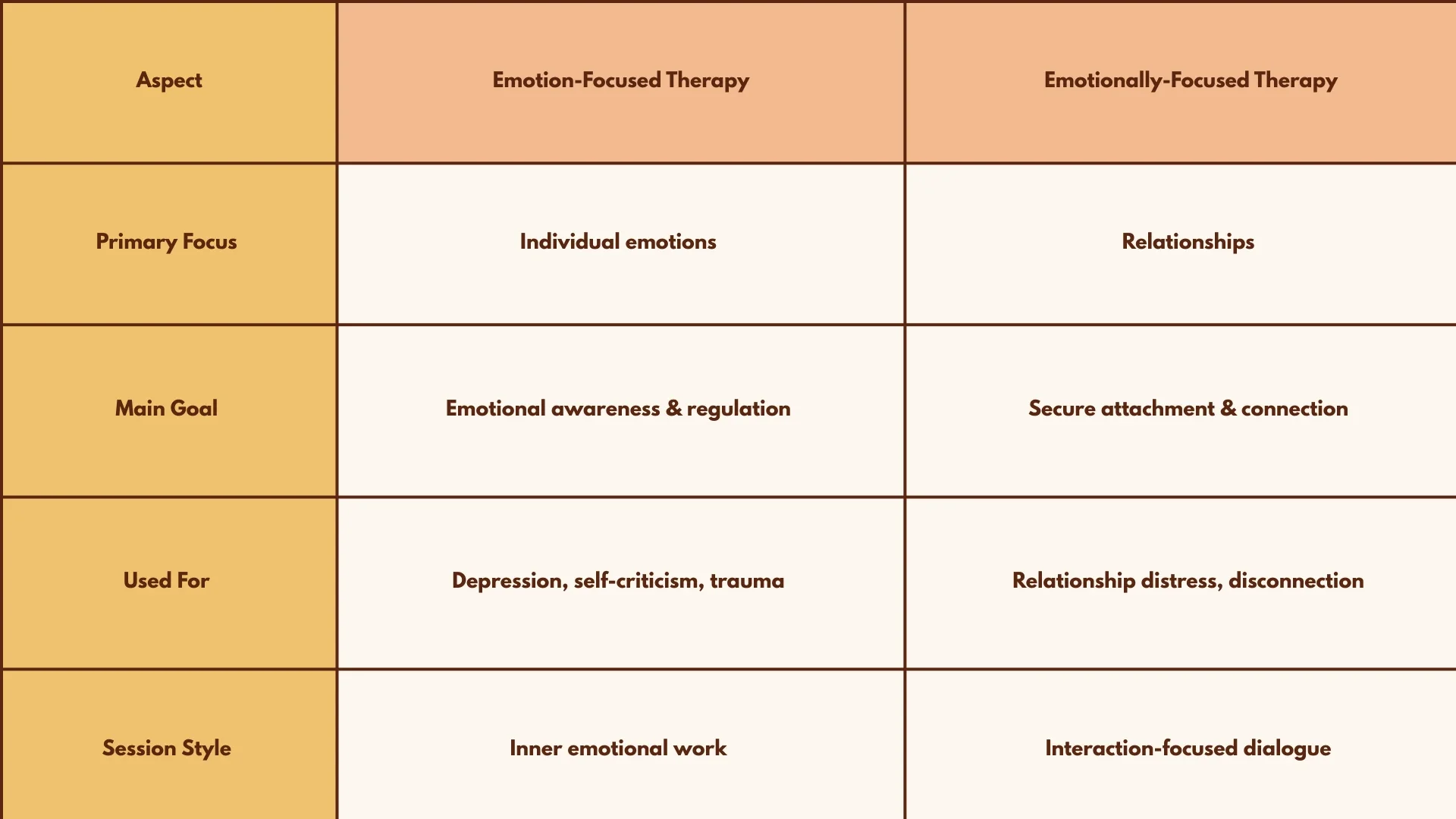
Emotion-Focused Therapy works on identifying and processing your emotions as well as reshaping your relationship with your emotions. It helps people who are dealing with things like depression, self criticism and emotional suppression by teaching emotional awareness, self-compassion and regulation. A session typically involves your therapist working with you to unpack your feelings, understand them and build more positive frameworks around them.
Emotion-Focused Therapy can be especially helpful if:
1️⃣ You struggle to identify or express emotions
You might think:
“I don’t know what I feel.”
“I shut down emotionally.”
2️⃣ You feel stuck in emotional patterns, such as:
Getting angry when you’re actually hurt
Shutting down whenever something feels vulnerable
Overreacting but not knowing why
3️⃣ You experience chronic self-criticism or shame

4️⃣ Your emotional reactions don’t match the situation
You know your response feels “too big” or confusing — but you can’t seem to change it.
5️⃣ You have a history of emotional wounds, including:
Parentification
Emotional neglect
Attachment wounds
Unresolved relational pain
6️⃣ You grew up needing to suppress emotions
You learned messages like:
“Don’t cry.”
“Be strong.”
“No feelings allowed.”
7️⃣ Old wounds still shape your current reactions
You know the trigger comes from the past — but your body responds like it’s happening now.
8️⃣ You want deep emotional healing, not just coping skills
Emotion-Focused Therapy works at the root of emotional responses, not only surface-level symptom management.
9️⃣ You want to build emotional insight and self-compassion
In simple terms Emotion-Focused Therapy is most helpful when the core struggle is emotional — helping you understand your feelings, safely experience them, and respond in healthier, more compassionate ways.
What Is Emotionally Focused Therapy (EFT) for Couples?
Emotionally-Focused Therapy, on the other hand, is an attachment-based therapy that works on building stronger emotional connections. It is especially helpful for relationships where things are tense or feel distant, but it still has applications in individual therapy. A session typically involves your therapist working with you to identify negative cycles in your relationships, analyze issues in attachment, and dismantle patterns that cause distance or harm to the relationship.
Emotionally-Focused Therapy can be especially helpful when:
1️⃣ Communication between partners breaks down
You’re stuck in frequent arguments or constant misunderstandings.
2️⃣ Emotional distance grows
There’s disconnection, loneliness, or building resentment between partners.

3️⃣ Trust has been hurt
You’re dealing with unresolved relational injuries or trust issues.
4️⃣ Someone feels unseen or unheard
One or both partners feel emotionally alone in the relationship.
5️⃣ You’re caught in negative cycles, such as:
Anxious–avoidant patterns
Emotional shutdown
Repeating arguments with no resolution
6️⃣ After infidelity or breaches of trust
When repair, emotional healing, and rebuilding safety are needed.
7️⃣ Vulnerability feels hard
Partners struggle to express emotional needs or open up safely.
8️⃣ You feel “stuck” as a couple
You keep having the same fights and can’t move forward.
9️⃣ You want to strengthen emotional attachment and security
🔟 Life stressors impact your relationship, including:
Parenthood
Illness
Immigration or cultural transitions
Grief or major life changes
Basically, Emotionally-Focused Therapy is most helpful when the core struggle is connection — rebuilding emotional safety, improving communication, and strengthening the secure attachment bond between partners.
So Which One Is Right for You?
If you find yourself struggling with understanding why you feel the way you do, experiencing shame around your emotions or not being able to feel your emotions at all, Emotion-Focused Therapy can help you unpack and accept those repressed and criticized emotions, as well as help you create empathy and space to validate them.
However, if you find yourself stuck in a cycle of distance, misunderstanding or hurt in your relationships, Emotionally-Focused Therapy will help you identify the cause of those hurdles, build empathy in the relationship to prevent the situation from reoccuring and also develop the tools to navigate those conflicts if they were to happen again.
These two situations do not always exist separately and often have overlap. Many people who find it difficult to validate their own emotions also unintentionally find themselves invalidating others’ and people like that will greatly benefit from a combination of the two.
Wait, is there one more EFT? Emotional Freedom Technique explained.
And just to make things extra confusing (cherry on top 🍒) — EFT can also stand for a third mental-health–related tool. But shis one is not a psychotherapy approach like Emotion-Focused Therapy or Emotionally Focused Therapy. It stands for Emotional Freedom Technique (EFT).
This EFT is a somatic regulation tool often used alongside therapy, rather than as a standalone treatment. It combines gentle tapping on acupressure points with verbal statements to help regulate emotional distress and calm the nervous system.
Emotional Freedom Technique can be helpful for:
Stress & anxiety relief
Moments of acute emotional overwhelm
Phobias or performance anxiety
Trauma symptoms (as a supportive tool)
Emotional regulation between therapy sessions
Body-based calming during triggers
So Emotional Freedom Technique isn’t “therapy” on its own — it’s more like a nervous-system calming technique that can support the deeper work happening in therapy. It’s a great tool for grounding, soothing the body, and helping emotions settle when they feel too big to manage.
Find the Right EFT Therapist in Alberta and other provinces
If you resonate with either, or both, of the descriptions above, your healing journey doesn’t need to be complicated, it just needs to start with the right therapist. Here, at TCC, we have therapists that offerE motion-Focused and EMotionally-Focused Therapies, as well as other helpful therapeutic approaches across Alberta, Ontario and multiple other provinces. Book a free 15 minute consult with a therapist to explore which approach fits your needs.
TLDR
So let’s sum it up:
Emotion-Focused Therapy (EFT)
Usually an individual therapy that helps you identify, process, and heal emotions — great for depression, self-criticism, emotional suppression, and feeling emotionally stuck.
Emotionally Focused Therapy (EFT)
Couples/relationship therapy focused on strengthening emotional bonds, improving communication, and breaking unhealthy relationship patterns.
Emotional Freedom Technique (EFT)
A tapping-based somatic regulation tool (not psychotherapy) that helps calm the nervous system and manage emotional distress — often used alongside therapy for stress, anxiety, and emotional overwhelm.
References:
https://www.thecognitivecorner.ca/emotionally-focused-therapy