
Why Am I Both Anxious and Avoidant Attachment in Relationships?

By now, you’ve probably come across a lot of content about attachment styles, even if you didn’t necessarily go looking for it.
Maybe you relate to anxious attachment. You overthink, worry about distance, and feel things deeply in relationships. Then avoidant attachment also feels familiar in a different way. You value space, feel overwhelmed when things get too close, and sometimes pull away right when someone starts to matter. So, it can feel confusing. How can both of these things be true at the same time?
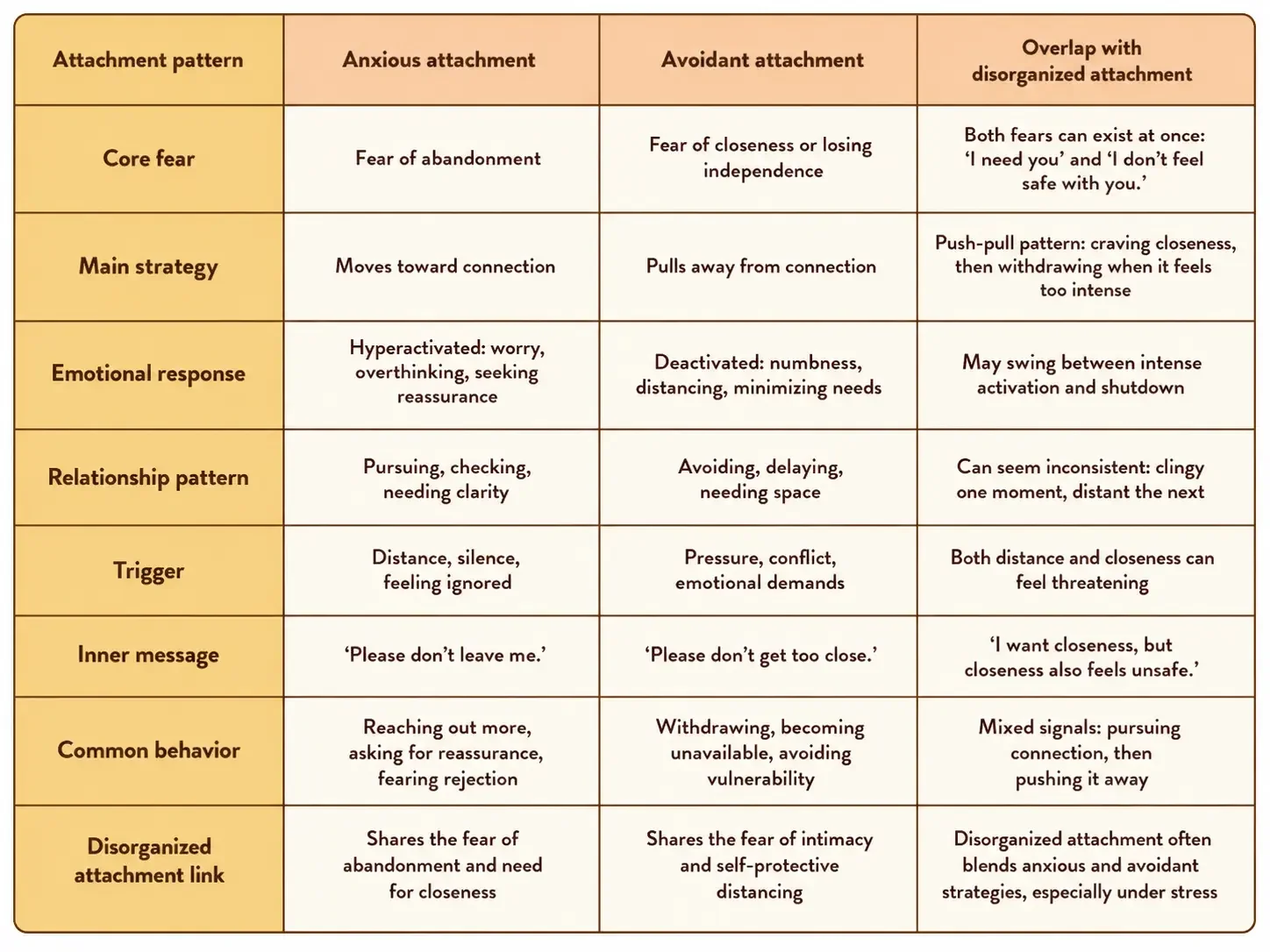
When people relate to both anxious and avoidant patterns, what they’re often describing is disorganized attachment, sometimes also called fearful avoidant attachment. Research describes this as a mix of proximity-seeking and distancing responses that can show up in close relationships, especially under stress. It can feel like wanting closeness and pulling away from it at the exact same time.
What Is Disorganized Attachment (Fearful Avoidant Attachment)?

Disorganized attachment is a pattern where there isn’t one consistent way of responding to closeness in relationships. Instead, your nervous system can shift between moving toward connection and moving away from it, sometimes without much warning or conscious choice.
In attachment research, this is often understood as a combination of both anxious activation and avoidant deactivation strategies that get triggered depending on emotional closeness or stress levels.
In real life, it can look like:
wanting closeness, then feeling overwhelmed once it’s available
seeking reassurance, then pulling back emotionally
feeling safer with distance than with consistency
not feeling “steady” in relationships for long
It’s not that you don’t want connection... rather, it’s that connection can feel both regulating and overwhelming at the same time.
Signs of Both Anxious and Avoidant Attachment Patterns = Disorganized Attachment
One of the most confusing parts of disorganized attachment is that you can recognize yourself in both anxious and avoidant patterns, sometimes in the same relationship.
It might look like spending a lot of mental energy thinking about a relationship, replaying conversations, or looking for reassurance when there’s distance. But then, when things feel emotionally close or stable, you might suddenly feel the urge to withdraw, go quiet, or create space without fully understanding why.
Other common patterns include:
feeling activated by distance, but also activated by closeness
swinging between reassurance-seeking and emotional shutdown
feeling unsure whether you want more closeness or more space
relationships feeling intense rather than steady
The reality is that it’s less about inconsistency on purpose and more about your system reacting to closeness in two opposite ways.
Why I Feel Anxious and Avoidant at the Same Time
This pattern often develops in early environments where closeness with caregivers didn’t feel consistently safe or predictable. Research on disorganized attachment highlights that it can emerge when guardians are both a source of comfort and a source of fear, creating a mixed internal response to closeness.
This can show up in experiences like:
a caregiver who was loving at times, but emotionally unavailable or unpredictable at others
needing comfort from someone who also felt overwhelming or unsafe
learning that connection doesn’t always feel steady or reliable
As a result, your nervous system learns two things at once: closeness is something you need, but also something that might not feel safe.
Both responses make sense based on what you learned early on.
What Disorganized Attachment Looks Like in Relationships?
In adult relationships, disorganized attachment often becomes more noticeable once emotional intimacy develops. Things may feel exciting or connected at first, but shift as closeness deepens.
It can show up as:
fast emotional starts where connection builds quickly
pulling away when things get closer or more stable
testing closeness indirectly by going quiet or withdrawing
difficulty trusting consistency, even in healthy relationships
self-sabotaging when things feel “too good” or too vulnerable
Relationships can start to feel like a cycle of moving in and out of connection, which can be emotionally draining even when you care deeply about the person.
What It Can Feel Like for your partner if you have disorganized attachment?
If you're in a relationship with someone who has disorganized attachment patterns, you may find yourself feeling confused or unsure of where you stand. One moment they may seem deeply connected and invested, and the next they may pull away, become distant, or seem uncomfortable with closeness.
Partners often describe feeling:
unsure of what changed or what caused the shift
confused by mixed signals or inconsistent behavior
responsible for managing the other person's emotions or reactions
anxious about bringing up relationship concerns
hurt when closeness is met with withdrawal
It's important to remember that these patterns are usually rooted in fear and past experiences rather than a lack of care or commitment. Understanding attachment patterns can help both partners make sense of recurring relationship dynamics and work toward healthier ways of connecting.
How to Heal Disorganized Attachment
Healing this pattern is about slowly building awareness and safety over time. Some of the most helpful starting points include:
noticing when you move toward or away from closeness without judging it
slowing down emotional intensity in relationships so things don’t feel all-or-nothing
learning to stay present during discomfort instead of automatically withdrawing
supporting your nervous system so closeness feels less activating over time
practicing small, consistent moments of secure communication and connection
These shifts can feel subtle, but they build over time into a different relational experience.
How Therapy Can Help With Disorganized Attachment
Therapy can be helpful when relationships feel confusing, intense, or hard to trust, especially when you can see both anxious and avoidant patterns in yourself.
At The Cognitive Corner, we support attachment-related concerns using approaches that work with both emotional experience and nervous system responses.
Here are some approaches we would utilize:
Cognitive Behavioural Therapy (CBT), which can help identify and challenge unhelpful thought patterns that contribute to relationship difficulties and fears around connection
Dialectical Behaviour Therapy (DBT), which supports emotional regulation, distress tolerance, and interpersonal effectiveness, all of which can be helpful when navigating intense relationship dynamics
Eye Movement Desensitization and Reprocessing (EMDR) therapy, which can help process traumatic or distressing life experiences, so they have less impact on current relationships
Somatic therapy, which focuses on how attachment patterns show up in the body and nervous system
Internal Family Systems (IFS), which helps you understand the different parts of you that want closeness and protection at the same time
Narrative therapy, which helps you explore the stories and beliefs you've developed about yourself, relationships, and trust, and create space for new ways of understanding your experiences
Therapy is about helping your system feel safe enough that closeness doesn’t have to feel like something to swing between. If this resonates with you and you’re noticing these patterns in your relationships, you don’t have to figure it out on your own. You can book a free consultation with one of our therapists at The Cognitive Corner to talk through what you’re experiencing and explore what support might look like for you.
TL;DR
If you feel both anxious and avoidant in relationships, you may relate to disorganized attachment (also called fearful avoidant attachment). It often looks like:
wanting closeness but feeling overwhelmed by it
fear of abandonment and fear of intimacy existing at the same time
push-pull patterns in relationships
emotional intensity instead of steadiness
It usually develops from early experiences where closeness felt both supportive and unpredictable. While it can feel deeply ingrained, it – in fact -- is possible to shift over time with the right awareness, support, and therapy.